




Narcissus cyclamineus
cyclamineus daffodil



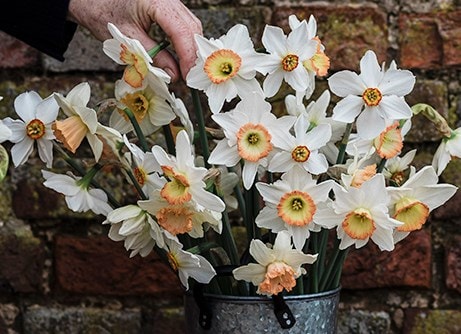
A graceful, miniature daffodil, ‘cyclamineus’ is one of the earliest Narcissi to bloom, displaying bright yellow single-heads with distinctive swept-back petals and slender trumpets which resemble cyclamen, hence their name. Tolerant of some shade, these wonderful bulbs naturalise easily and would be ideal for planting beneath deciduous trees or shrubs, where they will put on a wonderful early show.
How to care for Narcissus cyclamineus:
Once planted, Narcissus spp. are low-maintenance plants that will generate an abundant display of fresh flowers through late winter and spring. Plant them in autumn, in moderately fertile, moist but well-drained soil, where they will receive sun for most (if not all) of the day. The shape and size of daffodil bulbs will vary from species to species, but they should all be planted approximately 10-15cm (4-6in) deep, and with their pointy tips uppermost. planting, water in well and apply a general-purpose fertiliser to encourage the development of strong roots.
In spring, after the flowers have faded, nip off the spent flowerheads, but the stems and leaves should be allowed to die back naturally. In this way, they can then draw their energy back down into the bulb, where it can be stored for the next year's growth.
Daffodils also do extremely well in pots or window boxes filled with a good-quality potting compost. For a one-off seasonal treat, they can be planted shallowly and more densely, and perhaps topped with seasonal bedding such as winter-flowering pansies and primroses. After they’ve flowered they can then be re-planted as above in the borders or lawn.
In spring, after the flowers have faded, nip off the spent flowerheads, but the stems and leaves should be allowed to die back naturally. In this way, they can then draw their energy back down into the bulb, where it can be stored for the next year's growth.
Daffodils also do extremely well in pots or window boxes filled with a good-quality potting compost. For a one-off seasonal treat, they can be planted shallowly and more densely, and perhaps topped with seasonal bedding such as winter-flowering pansies and primroses. After they’ve flowered they can then be re-planted as above in the borders or lawn.
Flowering period:
- Jan
- Feb
- Mar
- Apr
- May
- Jun
- Jul
- Aug
- Sep
- Oct
- Nov
- Dec
Eventual height:
0.25m
Eventual spread:
0.07m
Position:
Full sun / light shade
Rate of growth:
Average
Soil:
Moderately fertile, moist but well-drained soil, or peat-free general purpose compost
Hardiness:
Fully hardy
-
 This bulb dies back after flowering each year and enters a period of rest ahead of regrowth the following season.

-
Humans/Pets: Ornamental bulbs - not to be eaten


